

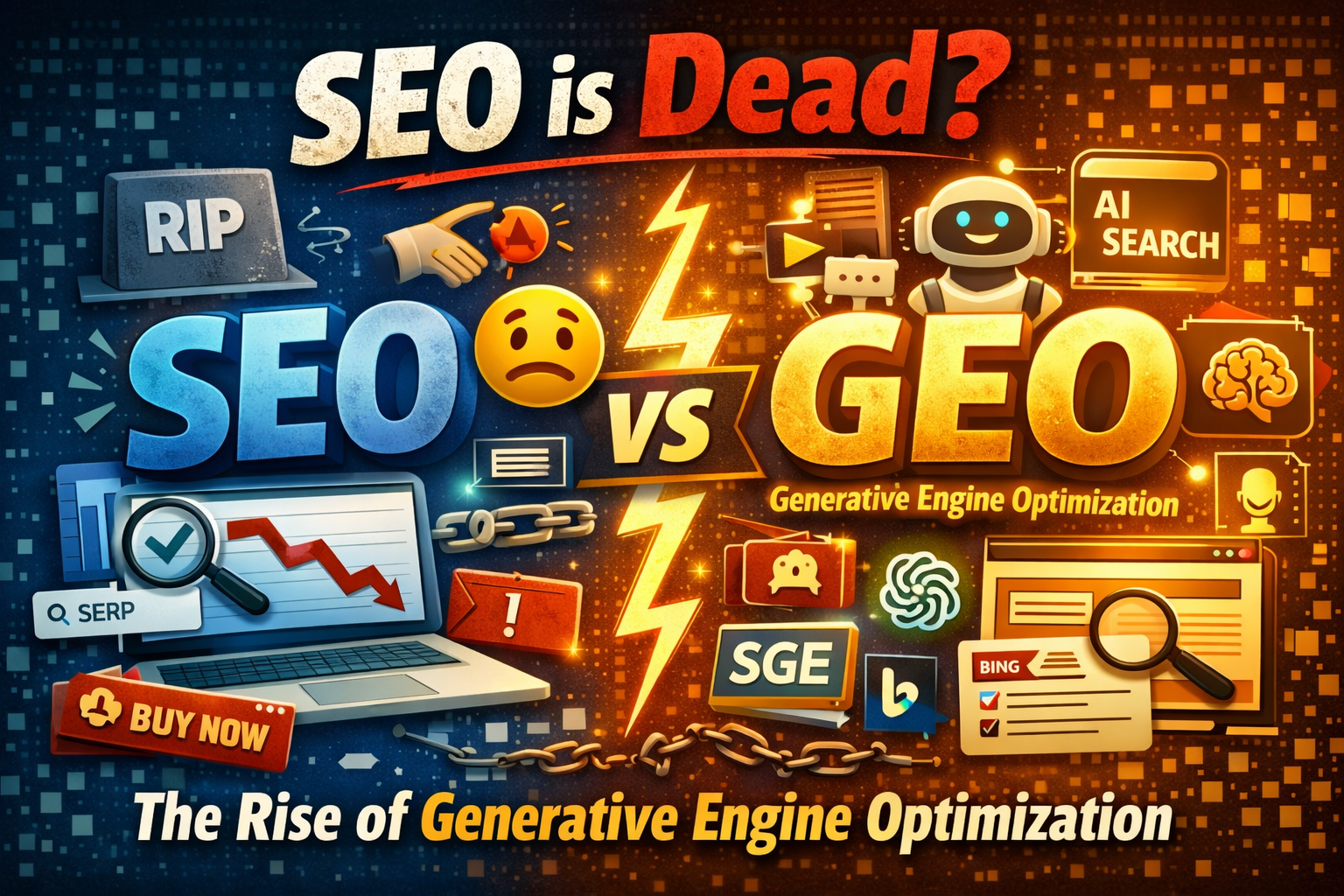
SEO is Dead? The Rise of Generative Engine Optimization (GEO)
For years, Search Engine Optimization (SEO) has been the backbone of digital visibility. But in 2026, the rise of Generative Engine Optimization (GEO) is changing the game. With AI-driven search engines like Google SGE, Bing Copilot, and ChatGPT delivering direct answers, businesses must rethink how they optimize content. GEO is not about keywords alone—it’s about making your content answer-ready for generative engines.
🔍 What Is GEO?
Generative Engine Optimization (GEO) is the practice of optimizing content for AI-powered search engines that generate direct responses instead of traditional SERPs.
Key Features of GEO:
- Structured, context-rich content.
- Semantic clarity for AI parsing.
- Trust signals like author bios and citations.
- Answer-based formatting (FAQs, tables, comparisons).
📊 GEO vs SEO: Key Differences
| Feature | SEO (Traditional) | GEO (Generative) |
|---|---|---|
| Target | SERPs (10 blue links) | AI-generated answers |
| Ranking Factors | Keywords, backlinks, page speed | Semantic clarity, source trust, structured data |
| Output | Click-through to website | Direct answer with citation |
| Tools | Google Search Console, Ahrefs | SGE dashboards, GEO analytics |
| Content Style | Keyword-optimized | Context-rich, answer-ready |
⚠️ Why SEO Alone Isn’t Enough in 2026
- Traffic shift: Over 40% of search traffic now flows through AI engines.
- Shrinking SERPs: Google SGE and Bing Copilot prioritize direct answers.
- User behavior: People expect instant, summarized results—not long click journeys.
🛠️ How to Optimize for GEO
1. Use Structured Content
Bullet points, tables, FAQs, and semantic headings help AI engines extract and cite your content.
2. Focus on E-E-A-T
Expertise, Experience, Authoritativeness, Trustworthiness—critical for GEO visibility.
3. Answer-Based Formatting
Write content that directly answers questions. Include definitions, comparisons, and actionable insights.
4. Embed Source Signals
Schema markup, author bios, and citations improve credibility in AI-generated responses.
5. Track GEO Visibility
Use emerging tools like Geol.ai, Presence AI, and SGE dashboards to monitor performance.
🚀 Should You Abandon SEO?
No. SEO is still relevant for traditional search, but GEO ensures visibility in AI-powered engines. A hybrid strategy is essential for full-spectrum search dominance.
✅ Conclusion
SEO is not dead—it’s evolving. In 2026, Generative Engine Optimization (GEO) expands the scope of digital visibility. Businesses that combine SEO with GEO will dominate both traditional SERPs and AI-generated answers.
Actionable Tip: Start restructuring your content with FAQs, tables, and schema markup today. GEO is the new frontier of search visibility—don’t get left behind.
Want to future-proof your content strategy? Contact us today to learn how GEO can transform your digital presence in 2026.